
Introduction
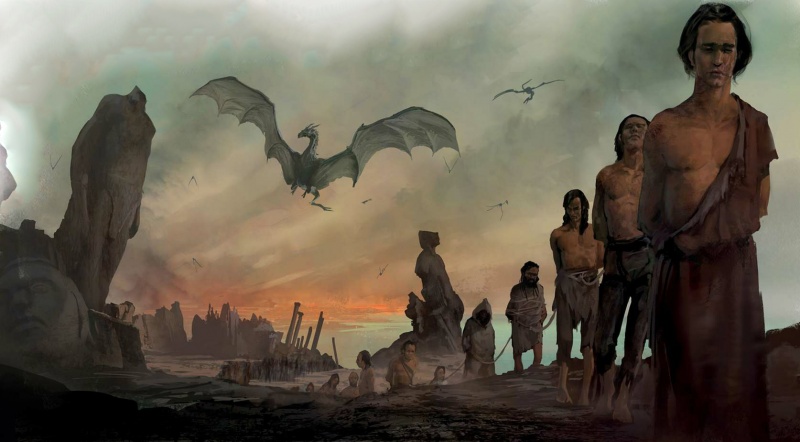
The Fall of the Ghiscari Empire
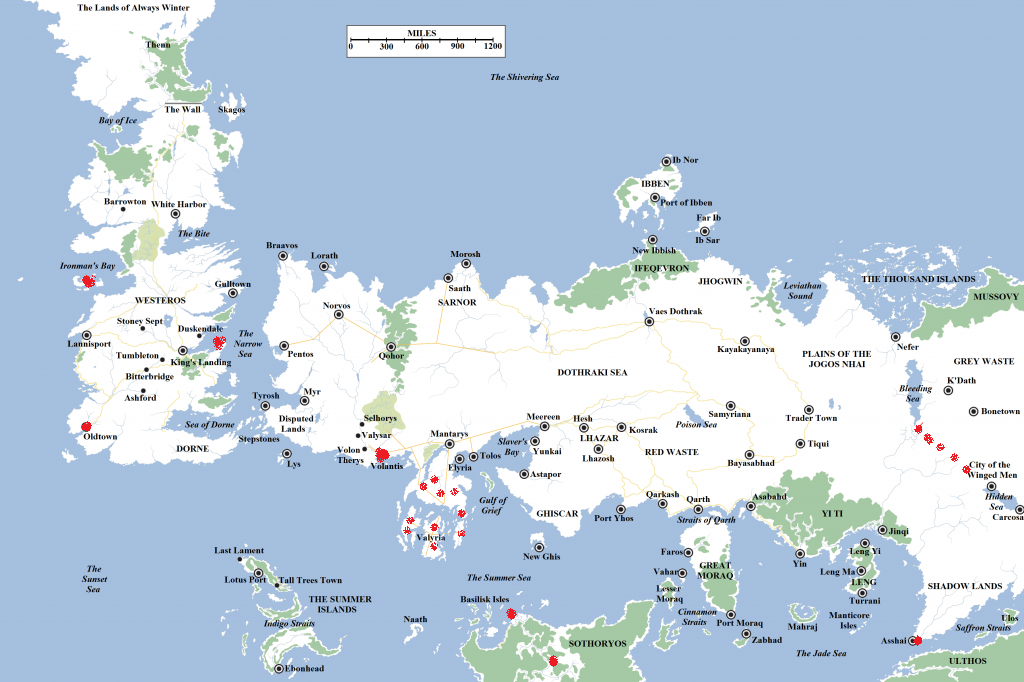
The growth of the Freehold of Valyria is detailed in the chapter “Valyria Children” of “The World of Ice and Fire” as follows:
The burning mountains of the Fourteen Flames were rich with ore, and the Valyrians hungered for it: copper and tin for the bronze of their weapons and monuments; later iron for the steel of their legendary blades; and always gold and silver to pay for it all.
As Valyria grew, its need for ore increased, which led to ever more conquests to keep the mines stocked with slaves. The Valyrians expanded in all directions, stretching out east beyond the Ghiscari cities and west to the very shores of Essos, where even the Ghiscari had not made inroads.
– A WORLD OF ICE AND FIRE
The Puzzle
Three things jump out from this information. For starters, the Valyrians were an aggressive expansionist empire. Second, as with all empires, their need for resources, particularly iron ore and slaves, grew as they expanded. Third, their need for minerals and slaves drove them to take risks in exploring new places for conquest of resources and people.
In one significant manner, the Valyrian empire was unique from previous empires. They possessed the military advantage of having an ariel weapon with enormous destructive capability. Something that none of their rivals has and that puts them at a significant disadvantage.
What is the significance of this? Because Valyrian Dragonlords never stepped foot in Westeros, a continent with a fragmented government and people that is rich in gold and iron ore. The Valyrians established outposts on Dragonstone but never advanced into mainland territory. Even more perplexing is their aversion to dealing with the Lannisters, whose massive gold mines were legendary in countries as far away as Yi Ti, or the Iron Islanders, whose island was rich in iron ore.
Why didn’t they do it? A few of Maesters provide explanations for the Valyrian Dragonlords’ unwillingness to interact directly with the lords of Westeros.
Maesters Speculation
Maester at Citadel
Fomas, Archmaester
Archmaester Fomas claims Valyrian dragonlords and some lineal claims in the Reach and Westerlands in Lies of the Ancients. Other Maesters reject his hypothesis.
Perestan, Archmaester
Archmaester Perestan had a different theory, claiming that the Valyrians had once reached Oldtown but experienced a tremendous setback or tragedy there, causing them to flee all of Westeros.
Barth, Septon
Septon Barth, on the other hand, theorized on the subject, citing a forgotten Valyrian document and claiming that the Freehold’s sorcerer foresaw that the wealth of Casterly Rock would destroy them.
While the anecdotal evidence shown above speculates on the reasons for the lack of interaction between the Freehold of Valyria and Westeros, it does not give any more proof of the dragonlord’s presence in Westeros prior to the creation of Valyria.
What additional anecdotal evidence suggests the presence of dragonlords and dragons before the formation of the Freehold of Valyria?
Vanyon, Maester
Maester Vanyon, in Against the Unnatural, says that certain evidence of dragons having been in Westeros even in the earliest of days before Valyria came to be a power, contradicting Septon Barth’s thesis in Dragons, Wyrms, and Wyverns that blood mages of Valyria utilized wyvern stock to make dragons.
Age of Heroes & Long Night
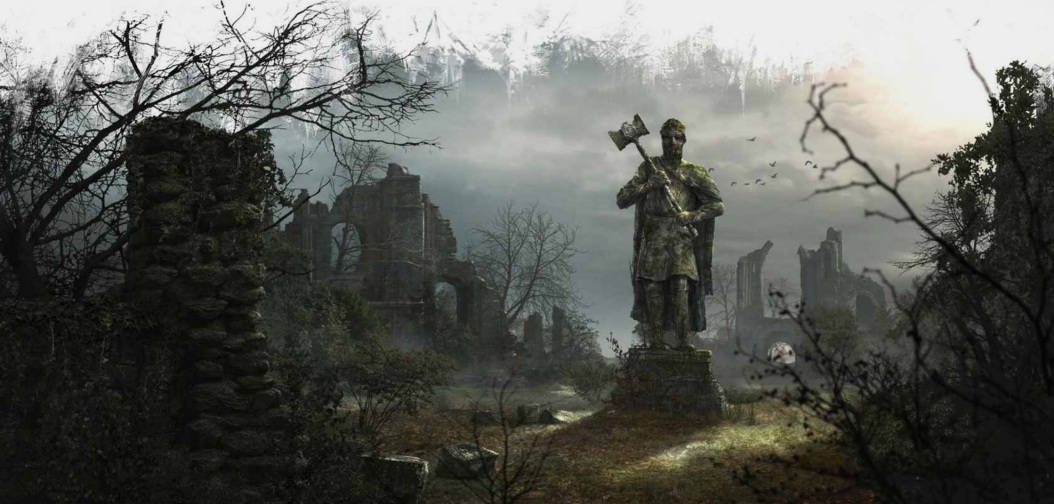
Ruined Ringfort of the First Men
We know that with the signing of the Pact between the Children of the Forest and the First Men at Godseye, the “Age of Heroes” began in Westeros and lasted until the Long Night, the advent of the Others, their defeat by the Last Heroes, and the construction of the Wall. The conclusion of the Long Night in Westeros coincided with the founding of the Freehold of Valyria, which led to the invasion of Westeros by the Andals. In addition, various anecdotal evidences of the existence of dragons and dragonlords date to this period
The Stark family and the Warg King
The old and mysterious House Stark has reigned over the North for thousands of years. They are descended from Brandon the Builder, the first Stark and renowned hero of the Age of Heroes. Subsequently, the Kings of Winter, as they fashioned themselves, violently conquered and extended the kingdom. A chronicle in the library of the Night’s Watch contains an illustration of their brutal combat.
Chronicles found in the archives of the Night’s Watch at the Nightfort (before it was abandoned) speak of the war for Sea Dragon Point, wherein the Starks brought down the Warg King and his inhuman allies, the children of the forest. When the Warg King’s last redoubt fell, his sons were put to the sword, along with his beasts and greenseers, whilst his daughters were taken as prizes by their conquerors.
– A FEAST FOR CROWS
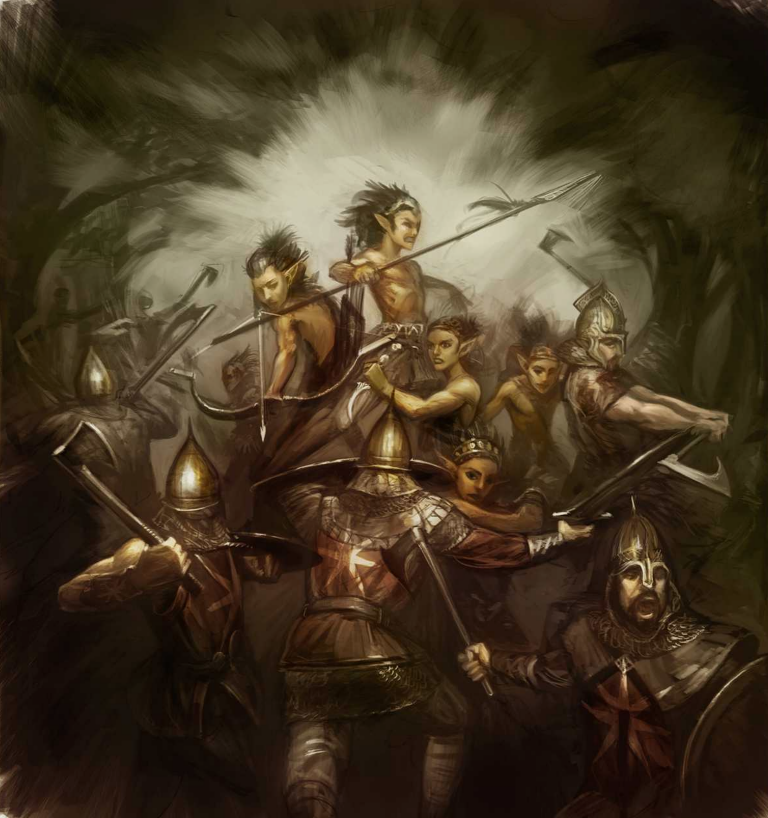
The Children of the Forest – Original Inhabitants of Westeros
The notion that the Starks battled against a Warg King and the Children of the Forest in a conflict known as the Battle for Sea Dragon Point is intriguing. Dragons lived in Westeros long before the founding of the Freehold of Valyria, as shown by the fact that they were referenced before and throughout the Age of Heroes.
Serwyn, The Kingsguard, Mirror Shield
There are numerous legendary Kings and hundreds of kingdoms in the Age of Heroes. One such mythical hero is Serwyn of the Mirror Shield, who, according to legends, was a member of the Kingsguard. This organization was first established during Aegon the Conqueror’s reign.
Dragon Urrax and Serwyn of the Mirror Shield
Serwyn of Mirror Shield is referenced in the newly published book “Fire & Blood” in regard to fighting the dragon Urrax. As has been proven, Serwyn of the Mirror Shield lived during the Age of Heroes, prior to the dragonlords’ founding of the Freehold of Valyria.
Legend has it that during the Age of Heroes, Serwyn of Mirror Shield slew the dragon Urrax by crouching behind the shield so polished that the beast saw only his own reflection. By this ruse, the hero crept close enough to drive a spear through the dragon’s eye earning the name by which we know him still
–Fire & Blood – 300 Years Before A Game of Thrones
Davos the Dragonslayer & Kings of Reach
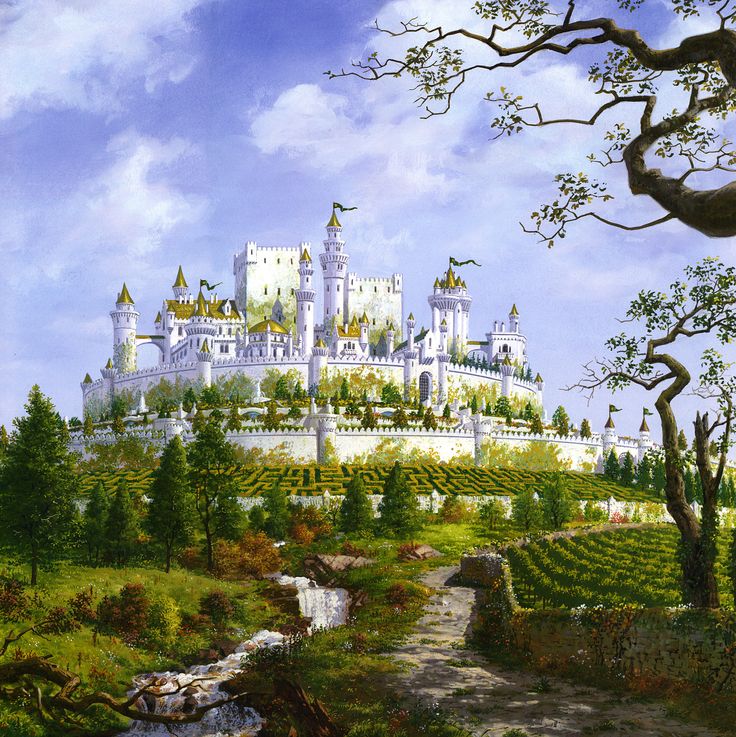
Highgarden the seat of House Gardeners
Davos the Dragonslayer is also referenced with Serwyn the Mirror Shield and the fabled creatures that led them. Garth V (Hammer of the Dornish), Gwayne I (the Gallant), Gyles I (the Woe), Gareth II (the Grim), Gareth VI (the Morningstar), and Gordan I are among the rulers whose names are referenced (Grey-Eyes).
Why is this significant? Given their names and descriptions, it may be determined with a high degree of confidence that these were the names of Kings who reigned over Reach and Dorne and belonged to House Gardener, the defunct Kings of Reach whose lineage can be traced back to the legendary Garth the Greenhand.
This material is of special relevance since it establishes a connection between the Reach and dragonslayers, verifying Archmaester Fomas’ assertion that the Valyrian dragonlords had a lineal claim.
“Archmaester Fomas’s Lies of the Ancients—though little regarded these days for its erroneous claims regarding the founding of Valyria and certain lineal claims in the Reach and westerlands.”
– A World of Ice & Fire
Long Night & Dragonsteel
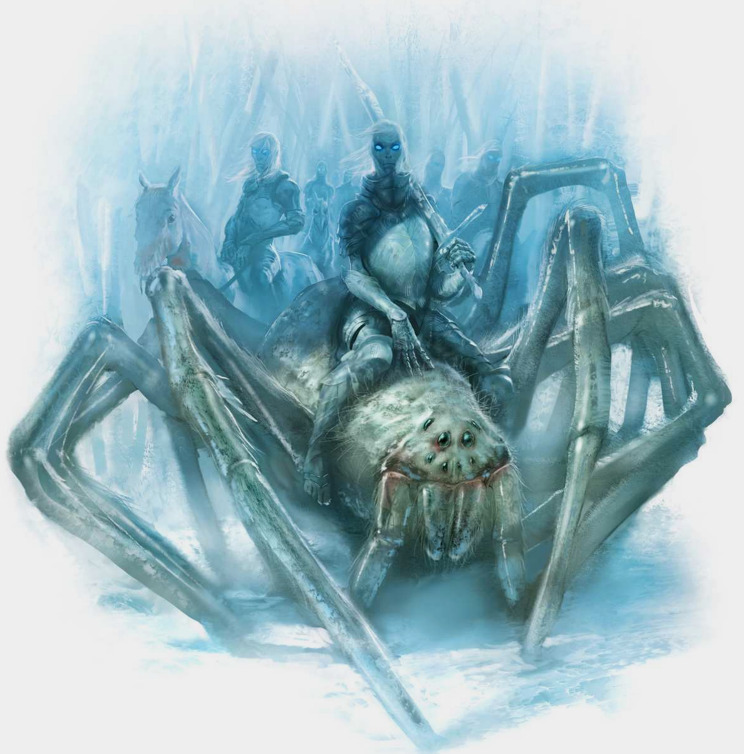
The Others During the Last Long Night
Samwell Tarley provides the most intriguing accidental proof of the existence of dragons and dragonlords in “A Feast for Crows.”
Tarley reveals the following to Jon Snow during a conversation about the White Walkers:
“The armor of the Others is proof against most ordinary blades, if the tales can be believed,” said Sam, “and their own swords are so cold they shatter steel. Fire will dismay them, though, and they are vulnerable to obsidian.” He remembered the one he had faced in the haunted forest, and how it had seemed to melt away when he stabbed it with the dragonglass dagger Jon had made for him. “I found one account of the Long Night that spoke of the last hero slaying Others with a blade of dragonsteel. Supposedly they could not stand against it.
“Dragonsteel?” Jon frowned. “Valyrian steel?”
– A Feast for Crows
Old Nan is the first to tell us of the Long Night, Others, and the famous Last Hero. However, nobody takes her tales seriously and the Long Night is dismissed as a fairy tale.
So as cold and death filled the earth, the last hero determined to seek out the children, in the hopes that their ancient magics could win back what the armies of men had lost. He set out into the dead lands with a sword, a horse, a dog, and a dozen companions. For years he searched, until he despaired of ever finding the children of the forest in their secret cities. One by one his friends died, and his horse, and finally even his dog, and his sword froze so hard the blade snapped when he tried to use it. And the Others smelled the hot blood in him, and came silent on his trail, stalking him with packs of pale white spiders big as hounds—”
– Game of Thrones, Bran VI
Not only is Old Nan’s account accurate, but it also looks that the Last Hero used dragonsteel to kill the Others. (not to be confused with Children of the Forest’s Obsidian dagger)
Dragonsteel in Westeros during the Age of Heroes is the most significant anecdotal evidence supporting the presence of dragons and dragonlords, since iron swords were first introduced to Westeros by the Andals after the end of the Long Night and the foundation of the Freehold of Valyria.
Valyrians used magic and iron ore to turn iron into steel, making Valyrian steel swords their primary export and source of national pride. Samwell Tarley, however, mentions dragonsteel, not obsidian, as the material used by the Last Hero to kill Others during the last Long Night.
Black Stone in Westeros
Throughout Westeros and Essos, several structures have been constructed using a black stone of unknown provenance. Some of it is characterized as oily or greasy, unlike the comparable but drier and more detailed Valyrian dragon stone.
Seastone Chair & House Greyjoy
The origin of the throne of the Greyjoys, which is fashioned like a Kraken and carved from an oily black stone, is obscure and controversial. It is thought that the throne was created by the descendants of the First Men. However, both Maesters and Iron Islanders themselves express skepticism. First, unlike the Andals, the First Men were not sailors, and the Iron Islanders’ traditions and culture are separate from the rest of Westeros.
Archmaester Haereg once advanced the interesting notion that the ancestors of the ironborn camefrom some unknown land west of the Sunset Sea, citing the legend of the Seastone Chair. A possibility arises for a third race to have inhabited the Seven Kingdoms in the Dawn Age, but it is so speculative that it need only be dealt with briefly. Among the ironborn, it is said that the first of the First Men to come to the Iron Isles found the famous Seastone Chair on Old Wyk, but that the isles were uninhabited. If true, the nature and origins of the chair’s makers are a mystery. Maester Kirth in his collection of ironborn legends, Songs the Drowned Men Sing, has suggested that the chair was left by visitors from across the Sunset Sea, but there is no evidence for this, only speculation.
– A World of Ice and Fire
The argument about the origins of the Seastone Chair raises the idea of dragons and dragonlords existing in Westeros during the Age of Heroes. The seat of House Hightower on Battle Island in the harbor of Oldtown is the most important archaeological evidence that lends support to the claim that dragonlords lived in Westeros.
Hightower & Battle Island
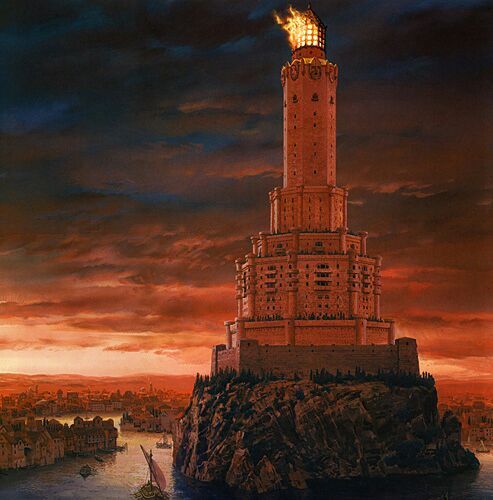
Hightower on Battle Island – The Ancient Seat of House Hightower
House Hightower, one of the Reach’s most powerful dynasties, calls The Hightower home. The castle and lighthouse are located on Battle Island in Oldtown’s port.
Westeros scholars and historians have been baffled by the massive square castle of black stone that dominates that isle. Who created it? When? Why?
The huge walls and labyrinthine interiors are entirely solid rock, with no indication of joins or mortar, and no chisel marks of any sort, a form of construction found elsewhere, most notably in the dragon pathways of the Freehold of Valyria and the Black Walls that defend the heart of Old Volantis.
If indeed this first fortress is Valyrian, it suggests that the dragonlords came to Westeros thousands of years before they carved out their outpost on Dragonstone, long before the coming of the Andals, or even the First Men. If so, did they come seeking trade? Were they slavers, mayhaps seeking after giants? Did they seek to learn the magic of the children of the forest, with their greenseers and their weirwoods? Or was there some darker purpose?
– A World of Ice & Fire
Furthermore, Maesters and commoners alike speculate about the origin of Oldtown itself.
How old is Oldtown, truly? Many a maester has pondered that question, but we simply do not know. The origins of the city are lost in the mists of time and clouded by legend. Some ignorant septons claim that the Seven themselves laid out its boundaries, other men that dragons once roosted on the Battle Isle until the first Hightower put an end to them. Many smallfolk believe the Hightower itself simply appeared one day. The full and true history of the founding of Oldtown will likely never be known.
– A World of Ice & Fire
Dawn & House Dayne

House Dayne – Wielders of the Sword Dawn
House Dayne is one of the oldest houses in the Seven Kingdoms, having ancestors dating back ten thousand years before the dawn of time.
It is said that the first Dayne built Starfall on an island near the entrance of the Torrentine after following a falling star and finding a magical stone there.
His descendants became the Torrentine Kings and Starfall Lords.
The eyes of Daynes have been described as dark blue or purple.
The Swords of the Morning are the knights who carry Dawn, the Daynes’ ancestral sword carved from a falling star.
Unlike other families with ancestral swords, House Dayne does not pass its sword from lord to heir.
Dawn may only be held by a knight of the aristocratic House Dayne.
The blade is as light as milk glass, unlike black Valyrian steel, yet has the same strength and edge.
Conclusion
The circumstantial evidence indicates that dragons and dragonlords exist in Westeros. Due to the fact that the First Men arrived in Westeros during the Dawn Age and the Freehold of Valyria was not established until the end of the Age of Heroes, it is safe to believe they were not Valyrian dragonlords.
In addition to giants and Children of the Forest, there are hints of the existence of a third race before the First Men. The dragonlords were the third race, correct? What was their narrative? Is it probable that the third race was wiped off, deported, or both? Is it conceivable that these Dragonlords travelled to the Freehold Peninsula during their exile and taught the future Valyrians the secrets of dragon breeding, or are the Valyrians really the third race? Did the Valyrians who made it to Westeros discover a horrible truth about their ancestors or mentors and decide not to visit Westeros again as a result?
At this time, we can only assume, yet there is sufficient history to suggest the existence of dragons in Westeros and the likelihood that certain circumstances led to their extinction until Aegon Targaryen and his dragons conquered the continent.
………………………………..
 Serving Essos & Westeros Since Dawn Age