
Summary
Arya Stark has been selected to grant the gift of death to the magically resurrected and controlled individuals in Westeros. Her role will be similar to that of the First Faceless Man, who helped the slaves in Freehold of Valyria end their suffering, by granting them the gift of death. She will learn this art of granting death in the House of Black and White.
Faceless Men might be deadly assassins, but their goals go beyond their present occupational description. Their ultimate goal and objective is to restore harmony in nature by rebalancing the natural cycle of life and death
Arya Stark of Winterfell – A Puzzle
Arya Stark- Ambiguous Storyline
One of the frustrating character development and narrative arc, in my opinion, has been Arya Stark.
Ever since leaving King’s Landing her journey is ambushed so many times, I must keep reminding myself that her destination was originally Winterfell and then Easteastwatch by the Sea.
Also, Arya’s trajectory is not very easily predictable, and her presence in Bravos, which appears on the surface, to be a coincidence, adds another layer of the puzzle to her character development.Based on a surface reading I initially developed two objective/end goal of the character:
»Arya trains to become a deadly assassin. She kills the people on her list. Arya dies or live
»Arya trains to become a deadly assassin. She doesn’t succeed in killing people on her list. Arya dies or lives.
»I have purposely left out a third scenario in which Arya does not succeed in her training and afails to kill the people on her list. I will come back to this in the following paragraphs.
When I reached this conclusion, it didn’t make much sense to me. The convoluted trajectory of Arya’s character development and her drifting story line creates an illusion, of a character, who appears to be inconsequential to the coming war for Dawn.
On the surface, the narrative arc seems to be hurtling towards a sad ending, even a cliché: Arya, the young, passionate, wild, restless, child with a penchant for breaking norms and rules, is unable to channel her experiences of a chaotic, selfish & greedy world, positively. Her goal it seems is to seek revenge, hurt those who harmed the Starks. Her presence in the House of Black and White solidifies this direction. Is this what her characters end goal is: to meet an inconsequential end?
I was having a tough time reconciling my conclusion until I read an essay by JoeMagician Hell is for real; The Fourteen Flames about First Faceless Man in Valyria. Then a light bulb went off in my head.
Arya Stark is not inconsequential cliche. She is central to ending the Long Night.
Arya Stark – A Hypothesis
Below I present empirical evidence of both Arya’s presence in the House of Black and White as proof of her extraordinarily important role in the War for Dawn.
Hypothesis –
What is Arya’s objective and what do I see as her plausible end goal in this series?
Arya will become an agent or angel of death, just like the First Faceless Man and learn to grant the gift of death . In doing so, her character becomes central in the War for Dawn in restoring the balance between life and death. By giving the gift of mortality, Arya Stark will restore harmony in nature thus becoming on of the important variables in ending the Long Night.
To expand on the argument presented above, I have charted my essay into subcategories:
» Arya’s predestined journey to House of Black and White & Comments & Observation about Arya in both Westeros and the House of Black and White.
» History, Philosophy, Business Operation & views on Death of Faceless Men. ** (Faceless Men Theory based on Joe Magician – Hell is For Real)
» The role of Death as an essential element in maintaining harmony in nature.
» Conclusions about Arya Stark’s Role in the War for Dawn.
Arya Stark – Her Narrative Trajectory
A) Predestined Destination – Arya’s journey from Kings landing to House of Black and White almost seemed predestined, like that of Bran but without any green seer or Arya even having knowledge of it.
There are hints of this predestined theme when Arya is on her way to Bravos. Arya doesn’t like the idea of her journeying to Bravos. She explicitly expresses her dismay at not being able to reach her intended destination, East watch by the Sea.
The following is an excerpt from “A Feast for Crows”, Arya Chapter 1.
Her home was gone, her parent is dead, and all her brothers slain but Jon Snow on the Wall. That was where she had wanted to go. She told the captain as much, but even the iron coin did not sway him.
B) Puzzling & Intriguing Observations regarding Arya – A good example of this would be, Kindly Man, who makes a strange comment about Arya’s presence in the House of Black and White, even though Arya dismisses it as a scare tactic.
My wants do not matter,” said the kindly man. “It may be that the Many-Faced God has led you here to be His instrument, but when I look at you, I see a child . . . And worse, a girl little. Many have served Him of Many Faces through the centuries, but only a few of His servants have been women. Women bring life into the world. We bring the gift of death. No one can do both.
What are some conclusions which can draw from this observation of the Kindly Man?
» Kindly Man believes Arya presence at the House of Black and White is for a purpose and pre-ordained by the Many-Faced God. It also confirms the previous assumption of her journey as predetermined.
» He is also slightly bewildered by the fact that Arya is a girl. Very few women have served the Many-Faced God per the Kindly Man. To the Kindly Man, women are representative of life, while they represent death.
» However, the presence of the Waif is an indication that women do serve the Many-Faced God. However, the presence of Waif can be reconciled if Arya’s journey to the House of Black and White has a different purpose or goal other than training to become a deadly assassin?
What if her purpose is something bigger?
Kindly Man, himself indicates this in his conversation with Arya about her kill list. In that conversation he provides hints that Arya might be in Bravos for a greater purpose:
Then you have come to the wrong place. It is not for you to say who shall live and who shall die. That gift belongs to Him of Many Faces. We are but his servants, sworn to do his will – Kindly Man Arya II, Feast for Crows.
C) Association with Death – Interestingly even before Arya reaches Braavos, she is associated with Death.
The most glaring example is her conversation with the Ghost of High-Heart:
I see you. I see you, wolf child. Blood child. I thought it was the lord who smelled of death … You are cruel to come to my hill, cruel. I gorged on grief at Summerhall; I need none of yours. Begonia from here, dark heart.
What does this all mean for Arya’s future? If her destination appears predestined but if being a deadly assassin is not where her arc is headed, then where is it moving?
Before I make my case, I am going to turn to Faceless Men.
Faceless Men – A Puzzle
Faceless Men – Business Operation & Philosophy
» Faceless Men trace their origin to the Freehold of Valyria. It is in the volcanoes of Valyria the – First Faceless Man gave the gift of death to the slaves who worked in those mines.
» Faceless Men are somewhat of a legendary assassin guild in Westeros. From Petyr Baelish to Tyrion everyone fears and reveres the Faceless Men.
Why are Faceless Men respected and feared?
» One, Faceless Men are exceptional assassins who carry out their task with precision and professionalism.
» Two, Faceless Men are highly selective of the clients and assignments they agree to conduct, along with charging fees in blood. They always consult Faceless-God. Sometimes, the price they extract is too high, and other times they refuse to take on the task. It adds a sense of mystery and mysticism.
Thus, Faceless Men are a different type of an assassin guild.While they are known as exceptional and high-priced killers, their primary function is to serve the Many-Faced God with whose blessing they give the gift of death to their target.
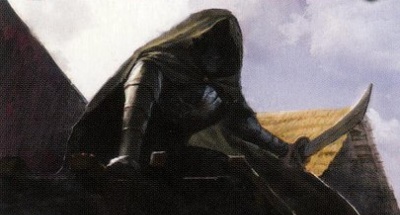
It also means neither material wealth or power sways this group. On the contrary, they believe themselves to be the humble servants of Many-Faced God, and it is only with his permission an assignment is accepted.
Below is a direct quote of Kindly Man view on Death also subscribed by the Faceless Men, which he shares with Arya:
Death holds no sweetness in this house. We are not warriors, nor soldiers, nor swaggering bravos puffed up with pride. We do not kill to serve some Lord, to fatten our purses, to stroke our vanity. We never give the gift to please ourselves. Nor do we choose the ones we kill. We are but servants of the God of Many Faces. – Kindly Man, A Dance with the Dragons.
Thus, Faceless Men hold a unique idea about Death and see it as a gift rather than a curse.
The Kindly Man the philosophy of the assassin guild as follows:
Death is not the worst thing, the generous man replied. “It is His gift to us, an end to want and pain. On the day that we are born the Many-Faced God sends each of us a dark angel to walk through life beside us. When our sins and our sufferings grow too great to be borne, the angel takes us by the hand to lead us to the night lands, where the stars burn ever bright. Those who come to drink from the black cup are looking for their angels. If they are afraid, the candles soothe them. When you smell, our candles burning, what does it make you think of, my child?
Faceless Men – History
There are rumours of Dragonlords of Valyria practising sorcery. For examples, it is claimed that the mages with their knowledge of sorcery kept the Volcanic Fire of Valyria, alive.
In addition to rumours of witchcraft the Dragonlords were known for their thirst for slaves, and under their empire, the slave trade expanded at an alarming rate. Dragonlords, thus, used slaves extensively to help them achieve their goals, including making slaves work in the volcanoes of Valyria to find precious stones for their quest for wealth and power.
The Kindly Man describes the dark conditions under which these slaves had to work:
We first took root in Valyria, amongst the wretched slaves who toiled in the deep mines beneath the Fourteen Flames that lit the Freehold’s nights of old. Most mines are dank and chilly places, cut from cold dead stone, but the Fourteen Flames were living mountains with veins of molten rock and hearts of fire. So, the mines of old Valyria were always hot, and they grew hotter as the shafts were driven deeper, ever deeper. The slaves toiled in an oven. The rocks around them were too hot to touch. The air stank of brimstone and would sear their lungs as they breathed it. The soles of their feet would burn and blister, even though the thickest sandals. Sometimes, when they broke through a wall in search of gold, they would find steam instead, or boiling water, or molten rock. Individual shafts were cut so small that the slaves could not stand upright, but had to crawl or bend. And there were wyrms in that red darkness too.” – Kindly Man, A Feast For Crows
Why are the description of these mines and the working conditions necessary?
It is important because these slaves worked under extreme conditions.
»Working in ordinary mines is fraught with hazardous conditions, add to that a live volcano, the slaves must have worked in a position which was humanly impossible to sustain.
» Some even burned and died from working in these volcanoes, but most of them survived. It is this point that raises a red flag or at the very least should lead us to ask, how did the rest survive in such hazardous conditions?
Can an explanation be found to the anomaly of an ordinary human being enduring extreme heat and working conditions? Yes, if we consider anecdotal evidence that dragonlord knew the art of reanimating the dead.
As presented below it is not implausible that such an event could not have transpired in Ancient Valyria:
» Several examples exist of people restored from the dead either individually or en masse.
» Some have been brought back through divine intervention, while others have raised from the dead through basic scientific experiments (or arcane magic who knows).
As of now, this unique ability exists in the following groups and individuals.
» North: White Walkers in Westeros can bring back the dead, several of them at a time. We do not know much about the Wights, but we do know that once reanimated, they do the bidding of their masters.
» River lands: The followers of the Lord of Light in Westeros have unique abilities to bring back the dead. Thor of Mars is its most well-known member.
» Kings Landing -Mysterious & Mad Scientist Qyburn, successfully brought back Ser Clegane now masquerading by the name Ser Robert Strong.
Hence, an argument can be made that there is more than enough chance that the slaves could survive the extreme conditions because they were reanimated to mine for metal and precious jewellery in the pits of the 14 Volcanic Flames.
There is also a piece of evidence in the story the Kindly Man narrates to Arya that indicates that these slaves were brought back from the dead to do the bidding of their Lords.
Men of a hundred different nations laboured in the mines, and each prayed to his own God in his tongue, yet all were praying for the same thing. It was release they asked for, an end to pain. A small thing, and simple. Their gods made no answer, and their suffering went on. – Kindly Man – Feast for Crows
Thus, from the Kindly Man’s description of the slaves and their conditions, it can be concluded that they were so desperate working as slaves that they would pray to their Gods to grant them the mercy of death.
Isn’t it a bit strange? They collaborate in mines, under a volcano. If they chose to, they could put an end to their misery. They were not able to do it. Why?
The only plausible explanation then would be that as reanimated slaves, they had limited power to put an end to their lives. If they could end their life, then they could be brought back to life again and again.
However, there was one man who could stand up to this sorcery. It was the founder of the Faceless Men, who was either given the gift or gained the knowledge of granting gift to these reanimated slaves; he was the first Faceless Man.
“No one,” he answered. “Some say he was a slave himself. Others insist he was a freeholder’s son, born of noble stock.” …… “All gods have their instruments, men and women who serve them and help to work their will on earth. The slaves were not crying out to a hundred different gods, as it seemed, but to one God with a hundred different faces . . . And he was that god’s instrument. That very night he chose the most wretched of the slaves, the one who had prayed most earnestly for release, and freed him from his bondage. The first gift had been given.” – Kindly Man, Feast for Crows (Not all sentences included)
Life & Death – Balance of Nature
We know both the followers of the Lord of Light & the Great Other can reanimate the dead. We also know some creatures can live for thousands of years.
Why exactly do their action illicit discomfort or disbelief or even fear among people of Westeros? In my opinion, it because they are an anomaly in the way we believe the law of nature should work.
If one can bring back people from the dead or live for millions of years, this will have at the very least an ecological impact and threaten the balance on which nature depends on survival.
Thus, if not corrected, it will create an apocalyptic scenario. In such a scenario, death is not something to be feared but accepted for its role in continuing the human’s existence on earth.
Ancient cultures and civilizations had a mixed view of death. The Sumerians, for example, saw death as a curse from the Gods, while other cultures viewed death a natural cycle.
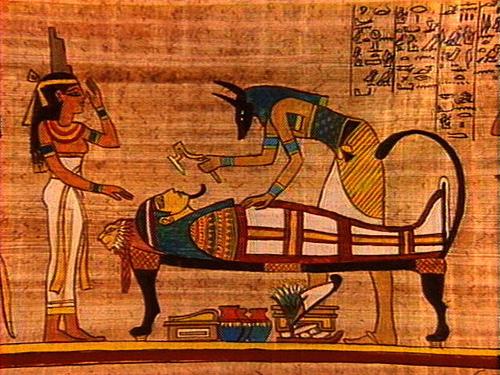
In particular, ancient Egyptians, like other pagan peoples, observed the unending cycles of nature. According to Egyptians, the sun seemed to be reborn each morning and died each night, spring was a time of birth, growth, and youth, in winter plants died, and even the sun seemed to fight for its existence, and the following spring the cycle began anew. Historians record that Egyptians interpreted these patterns of life, death, and renewed life as applying to humans as well.
Buddhism is another religion which has stressed the importance of death since awareness of mortality is what prompted the Buddha to perceive the ultimate futility of worldly concerns and pleasures. A lot of Buddhist teaching focuses on the inevitability of death and how one needs to aware of it and even prepare for attaining moksha through knowledge when your soul is finally free from the cycle of rebirth and has achieved freedom.
I don’t want to go into detail about the understanding of death in ancient civilizations. I wanted to provide historical examples where cultures or religions have understood the importance of mortality as an essential element to our continued survival and seen it as something to be embraced rather than feared. This balance, in turn, can impact the harmony between elements and species on which life’s existence depends.
Coming back to the House of Black and White, an interesting aspect of all the Gods housed there is that none of those is symbolic of life. Gods in the House of Black and White symbolize war, wealth and even death, but none signify life. It is probably one of the reasons the Faceless Men claim all the Gods are subservient to the God of Death.
It is, in my opinion, essential to note. Why? Lord of Light & the Great Other, his enemy, can bring back the dead and even extend the life of a person, but in the House and Black White, they are not considered the God of Life. Which means both Lord of Light & Great Other is not the force which ensures a balance of nature. They are a force which disrupts nature’s harmony.
Given that these Gods can extend life and bring back the dead, they then have the power to create an imbalance in nature.
Thus, the role of The Many-Faced God or the God of Death or the art of granting death becomes significant primarily in restoring the balance of nature.
Conclusion
So again, what does this have to do with Arya or her story arc?
From all the evidence that I have presented, I conclude:
» Arya was predestined to reach Bravos and House of Black and White.
» She thinks she is training to be an assassin. However, from the anecdotal evidence presented above, it is evident she has a grander purpose.
» As we know, some individuals and groups can reanimate the dead or extend the life of an individual. Both these acts can create an imbalance in nature.
» Anecdotally, Joe Magician’s Post also established that reanimated slaves in the Freehold of Valyria could not die whenever they chose to. Hence, the granting of death by the First Faceless Man became a gift to those in pain and suffering.
» Also, extending of life of human being creates an imbalance in nature.
» Faceless Men view death as a gift and consider themselves to be angels or agents of death, who are representing the Many-Faced God to terminate the suffering of men when their sins or pain grow too great to be borne. (See above for actual quote)
Summarising the anecdotal evidence, I theorise that Arya’s purpose and the end goal is to be the agent of death, like the First Faceless Man, who granted the gift of mortality to slaves who could not find a way to bring an end to their suffering.
Thus, in my opinion, Arya’s narrative arc will not be of an embittered Stark who becomes a deadly assassin fulfilling her need to seek revenge on those who brought harm to her family. Instead, her character, I propose, is elevated to the position of the First Faceless Man who granted the gift of death to the slaves in the mines of Valyria thus putting to an end human misery and pain.
Arya will thus play a central role in the War for Dawn, by granting the Wights, magically or scientifically resurrected or genetically transformed human beings, the gift of death. She will thus be instrumental in restoring harmony and balance in nature. Hence her narrative arc will be that of a Stark who will play a decisive role in ending the Long Night along with Lannister, Targaryen & Starks.
 Serving Essos & Westeros Since Dawn Age